Discover a ceramic story that links Japan’s famous toilets, a visit to Noritake Garden, and the auto


How Koromo Became Toyota City in 195
In 1959, a Japanese city changed its name to Toyota.
Until then, it had been called Koromo. The new name recognized the importance of Toyota Motor to the local economy and expressed the city’s ambition to build its future around industry.
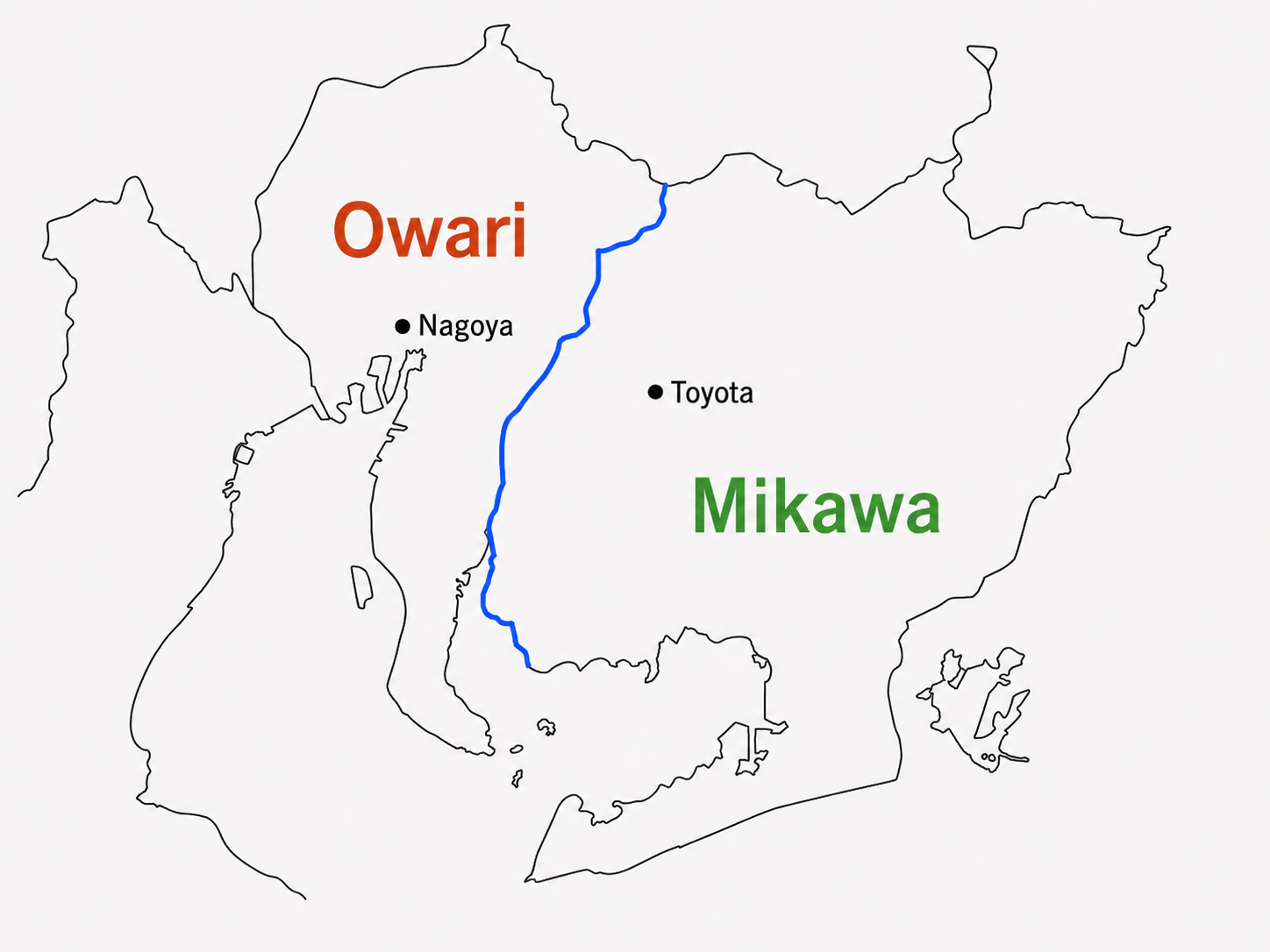
Today, Toyota City lies east of Nagoya, in the Mikawa region of Aichi Prefecture. Its name is familiar around the world through the cars made by the company headquartered there. Understanding how the city acquired that name reveals a history that reaches well beyond automobiles.
Koromo was an established castle town long before Toyota arrived. During the late nineteenth and early twentieth centuries, it developed through silkworm farming and silk production. It was also an important trading center for cocoons, linking the town to producers across the surrounding area. This trade helped support the development of its transport connections.
As demand for raw silk declined, the town faced an uncertain future. Local leaders began looking for another industry that could bring employment and renewed prosperity.
An opportunity emerged when the automobile department of Toyoda Automatic Loom Works, based in Kariya, was seeking land for a new factory. Koromo’s mayor, Juichi Nakamura, worked with the town council to attract the project. This was an active effort by a community seeking a new economic direction.
Toyota Motor Co., Ltd. was established in 1937, and the Koromo Plant was completed in November 1938. Machinery and equipment were transferred from Kariya to the new site, which became a major base for vehicle production. The plant is now known as the Honsha Plant.
The city’s new name would follow about two decades later.
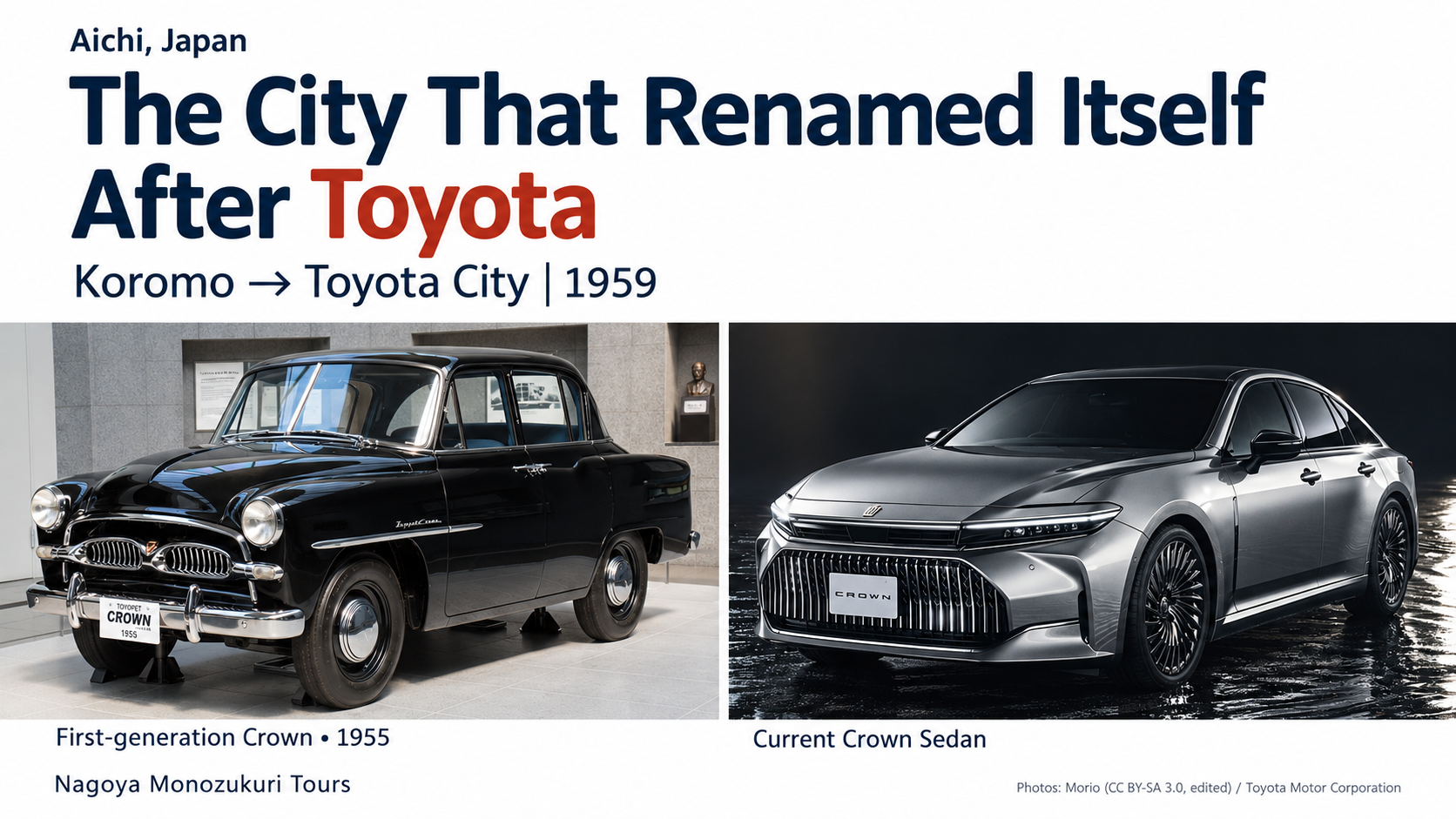
In the meantime, Toyota introduced the first-generation Crown in January 1955. That places the original Crown four years before Koromo became Toyota City—a useful connection when looking at the early car alongside a modern Crown. The company’s products and its home city were developing together during an important period of Japan’s industrial growth.
In 1959, Koromo adopted the name Toyota. The city’s official history records substantial local debate over the decision. Replacing a long-established place name involved questions of identity as well as economic opportunity.
I see the change as a statement of confidence in the city’s industrial future. It acknowledged the company’s contribution while making that relationship visible in the name people would use every day. For residents, the change also meant carrying an older local identity into a city increasingly associated with automobile manufacturing.
That older identity remains visible. Koromo Shrine still stands in central Toyota, and the Koromo Festival continues to bring traditional floats through the city. These names and traditions connect today’s streets with the community that existed before the motor industry arrived.
For visitors, this gives Toyota City another dimension. A visit to Koromo Shrine, or an exploration of local history at the Toyota City Museum, can add context to Toyota-related sightseeing. You begin to see the people and places that surround the company: a town that traded in silk, sought a new industry, debated its future and eventually changed its name.
Through Nagoya Monozukuri Tours, I introduce these connections between industry, history and local culture. If you are visiting Nagoya or Aichi, I can help build a private English guided tour around the stories that interest you.